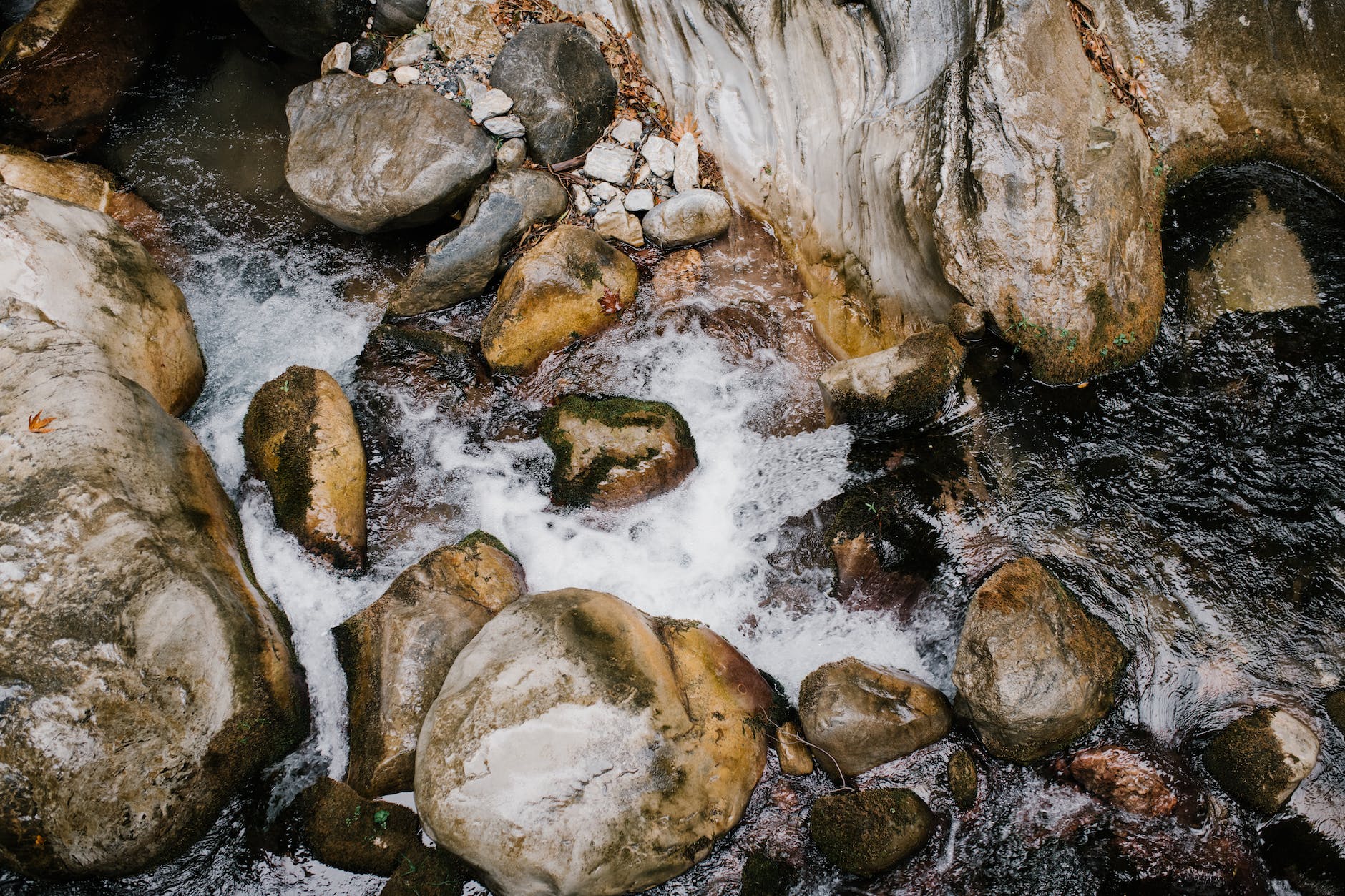
Many years ago, a few families formed a village in the countryside near rugged hills where wild goats lived. They domesticated the goats and began caring for the herd and growing a simple, local economy. The village grew up along a creek that spilled down out of the rocky, forested highlands. Even more than the goat herds, that creek was the lifeblood of the community.
Life went on peacefully for about twenty years, and then a gang of men from elsewhere arrived and tried to assert a claim on the people’s lands. With fair promises, they won a few of the village’s young men to their side. However, the rest of the villagers stood their ground and rejected the claims. Defeated, the gang departed.
But the gang went about achieving their aims another way. One day a few months later, the villagers heard a series of booms rumbling in the hills. The skies were mostly clear, so they told each other it couldn’t be thunder. In any case, it didn’t seem to be anything that affected them, so they went about their business.
It didn’t take long for them to realize that the creek’s level was dropping. Soon, it dried up altogether.
Confused, the village leader sent men on horseback upstream to discover what had happened. It appeared that someone had set off dynamite in multiple places, and the creek’s bed was blasted apart and strewn with large rocks. Instead of flowing in one steady stream, the creek now ran in rivulets in various directions. It no longer ran toward the village and couldn’t be used as a water source. The villagers hadn’t the means to create a reservoir. They had to begin bringing water in from another location. It was never as fresh and clear as what they had gotten from their own creek.
They never vacated the village like the gang had intended. But water was harder to come by, and the ones who brought it started charging the other villagers for their trouble.
Over time, the villagers became accustomed to this other water and for paying for it. Meanwhile, their goats seemed to be less healthy, and everything seemed less clean. The situation with water became a point of contention among the villagers.
A young man named Will—who was too young to remember drinking or using water from the creek—decided something had to be done. He had heard of the creek, and one day he decided to go looking for it. He traveled into the forest, clambering over and among large rocks. He could see the rivulets trickling in various directions. But how could the creek be brought back?
“You’re from the village down yonder, ain’t ya?” said a voice.
Will spun around and saw a man with a long, white beard trailing from under a wide-brimmed hat.
“Yes,” he admitted, not sure what to think of the other. “Who are you?”
“Just an old hermit,” came the reply. “Been living in these hills since before your village was founded. What are you looking for?”
“There used to be a creek here. It fed the village. But something happened to it.”
“Something did indeed,” said the hermit. “The enemies of your village did it. Used dynamite.”
Will scratched his head. “Is it possible to get it back? There are a lot of problems, a lot of fighting about water, and I think if we could get the creek back, it would solve … well, everything.”
“That it would,” the hermit replied. He beckoned. “Follow me.”
The hermit led the way up a hill to where a tiny pool of water sat among gray rocks—the original source of the spring. “Scoop some of that up,” the hermit instructed. “Taste it.”
Will did so, and the water was amazing. So clear and cold. “It’s wonderful.”
“There is a way to get the creek flowing again. But it ain’t easy. And you’ll need help. But now you know that water is worth it, right?” Will nodded. “Then gather some likeminded folks from the village and bring them back here at noon, day after tomorrow.”
Excited, Will agreed and hastened back into town.
Recruiting wasn’t easy. Most people he talked to didn’t believe that the creek could be restored. But a few close friends who knew Will wasn’t given to flights of fancy and accomplished whatever he set his mind to joined his cause. He returned with a band of twelve to the appointed place at the appointed time.
The hermit appeared with a load of tools. He eyed the group. “I’m gratified to see you all here,” he said. “You are the promise of a better future for your village. As I told your young friend here, this is going to take some work. But I want each of you to taste this water so you know what’s in it for you and everyone in your village.” As Will had, each man stooped and lifted water cupped in his hand to his mouth. They nodded, smiled, and commented amongst themselves.
“Now we get to work.”
Over the next weeks, the hermit’s work crew moved rocks and used many of them to pave a canal from the spring down out of the hills. The hermit oversaw the work, and he frequently invited them to drink from the spring, which always refreshed and strengthened the workers even more than food did. And somehow the hermit paid them in money as well.
When they had finished, clear waters flowed down to and through the village once more. The villagers gazed in wonder and then partook of the water. They cried out in joy and marveled at what they had been missing. Will and his friends told everyone about the hermit, and they praised him for directing the work that brought the pure water back to their midst.
Photo by Julia Volk on Pexels.com
On commenting: Please share your thoughts! You can leave an email address, but it’s not required. Leaving an email address may prompt you to sign in with a social media or WordPress account.
 The Weekly Parable